SupportBee
With SupportBee modules in Boost.space Integrator, you can:
-

watch, search, fetch, create, retrieve, trash, untrash, and delete tickets
-
watch new agents and customer replies
-
watch new comments
To get started with SupportBee, create an account at supportbee.com.
Connect SupportBee to Boost.space Integrator
To connect SupportBee app, you need to obtain the Domain and API Key values from your SupportBee account and insert them into the SupportBee module scenario.
-
Log in to your SupportBee account.
-
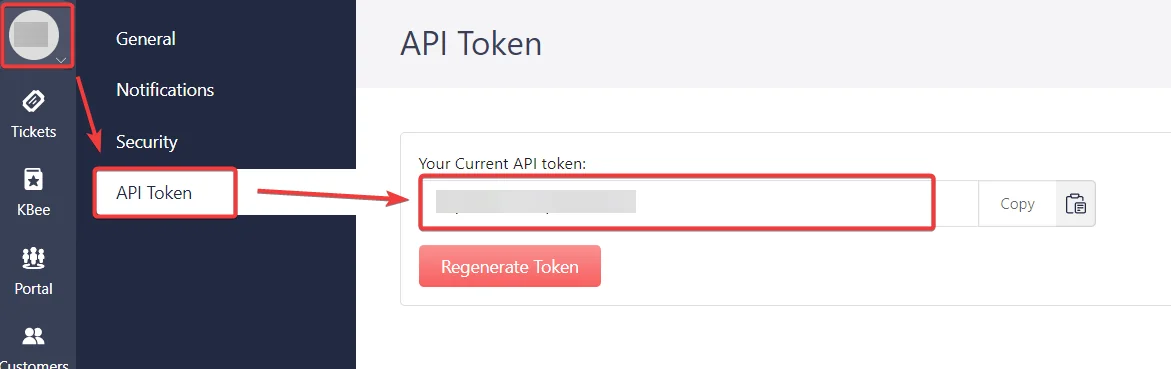
Click Profile > API Token. Copy the API Token to a safe place.
-
Log in to your Boost.space Integrator account, insert a SupportBee module scenario and click the Add button next to the Connection field.
-
In the Connection name field, enter a name for the connection.
-
In the Domain field, enter your account domain. For example, if your account URL address is
https://www.xyz.supportbee.com, then your domain isxyz. -
In the API Key field, enter the details copied in step 2 and click Save.
You have successfully established the connection. You can now begin editing your scenario and adding more SupportBee modules. If your connection needs reauthorization at any point, follow the connection renewal steps here.
Tickets

You can watch, search, fetch, create, retrieve, trash, untrash, and delete tickets using the following modules.
Watch New Ticket
Watches for a new ticket
Webhook name
Enter a name for the webhook.
See Setting Up Supportbee Webhooks to add webhooks in your Supportbee account.
Search Tickets
Searches from all tickets.
Connection
Establish a connection to your SupportBee account.
Limit
Set the maximum number of tickets Boost.space Integrator will return during one execution cycle. The default value is 10.
See the SupportBee Tickets API reference for entering the field values to search for the tickets that match the specified value.
Fetch Tickets
Fetches tickets.
Connection
Establish a connection to your SupportBee account.
Limit
Set the maximum number of tickets Boost.space Integrator will return during one execution cycle. The default value is 10.
For field descriptions, see the SupportBee Tickets API reference.
Create a Ticket
Creates a ticket.
Connection
Establish a connection to your SupportBee account.
For field descriptions, see the SupportBee Tickets API reference.
Get a Ticket
Gets a ticket.
Connection
Establish a connection to your SupportBee account.
Ticket ID
Select or map the Ticket ID whose details you want to retrieve.
Trash a Ticket
Trashes a ticket.
Connection
Establish a connection to your SupportBee account.
Ticket ID
Select or map the Ticket ID you want to trash.
Un-Trash a Ticket
Un-trashes a ticket.
Connection
Establish a connection to your SupportBee account.
Ticket ID
Select or map the Ticket ID you want to un-trash.
Delete a Trashed Ticket
Deletes a trashed ticket.
Connection
Establish a connection to your SupportBee account.
Ticket ID
Select or map the trashed Ticket ID you want to delete.
Replies
You can watch new agents and customer replies using the following modules.
See Setting Up Supportbee Webhooks to add webhooks in your Supportbee account.
Watch New Agent Reply
Watches for a new agent’s reply.
Webhook name
Enter a name for the webhook.
Watch New Customer Reply
Watches for a new customer reply.
Webhook name
Enter a name for the webhook.
Comment
You can watch new comments using the following modules.
Watch New Comment
Watches for a new comment.
Webhook name
Enter a name for the webhook.
See Setting Up Supportbee Webhooks to add webhooks in your Supportbee account.
Other
You can call APIs using the following module.
Make an API Call
Performs an arbitrary authorized API call.
For the list of available endpoints, refer to the SupportBee API documentation.
Connection
Establish a connection to your SupportBee account.
URL
Enter a path relative to https://<domain>.supportbee.com. For example /tickets.
Method
GET
to retrieve information for an entry.
POST
to create a new entry.
PUT
to update/replace an existing entry.
PATCH
to make a partial entry update.
DELETE
to delete an entry.
Headers
Enter the desired request headers. You don’t have to add authorization headers; we already did that for you.
Query String
Enter the request query string.
Body
Enter the body content for your API call.
Example of use – Fetch Tickets
The following API call fetches tickets from your account.
URL: /tickets
Method: GET
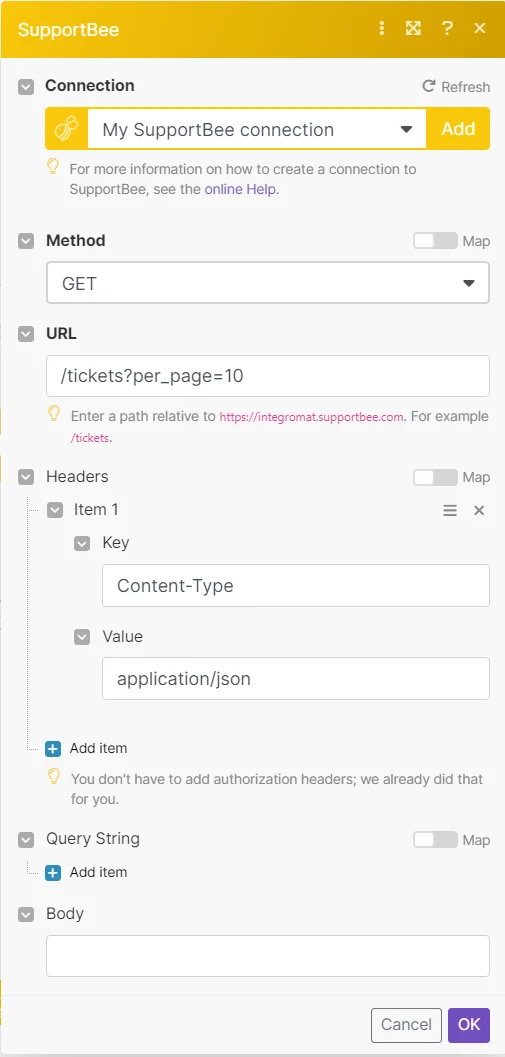
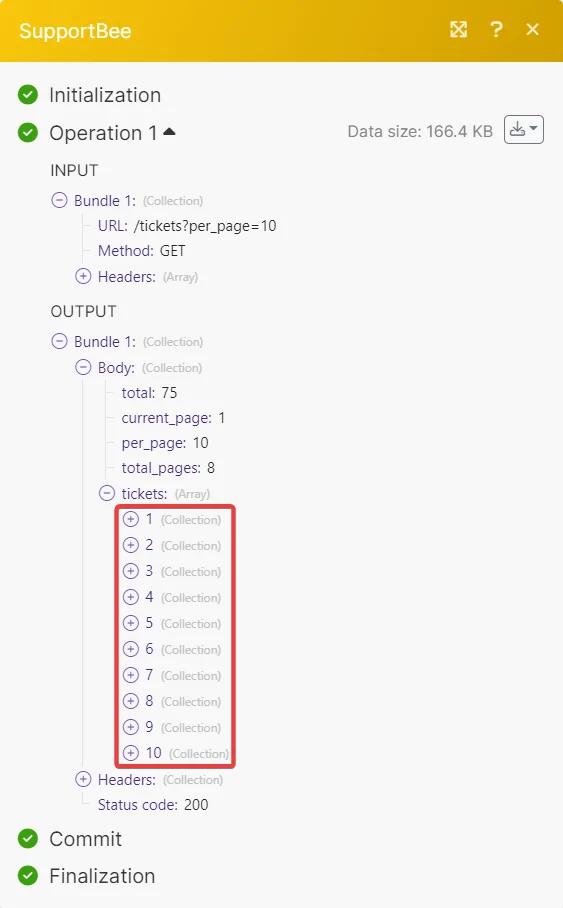
Matches of the search can be found in the module’s Output under Bundle > Body > tickets.
In our example 10 tickets were returned:
Setting Up Supportbee Webhooks
To set up the supportbee webhooks:
-
Open any Watch module, enter a name for the webhook, click Save and copy the URL address to your clipboard.
-
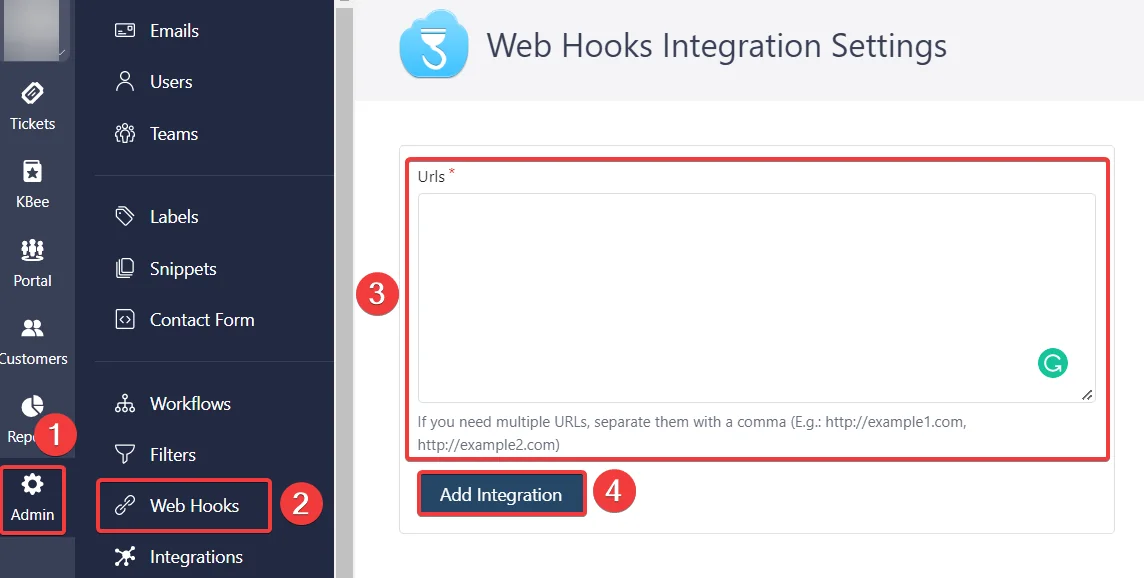
Log in to your Supportbee account, and click Admin > Web Hooks.
-
In the URL field, enter the URL address copied in step 1 and click Add Integration.
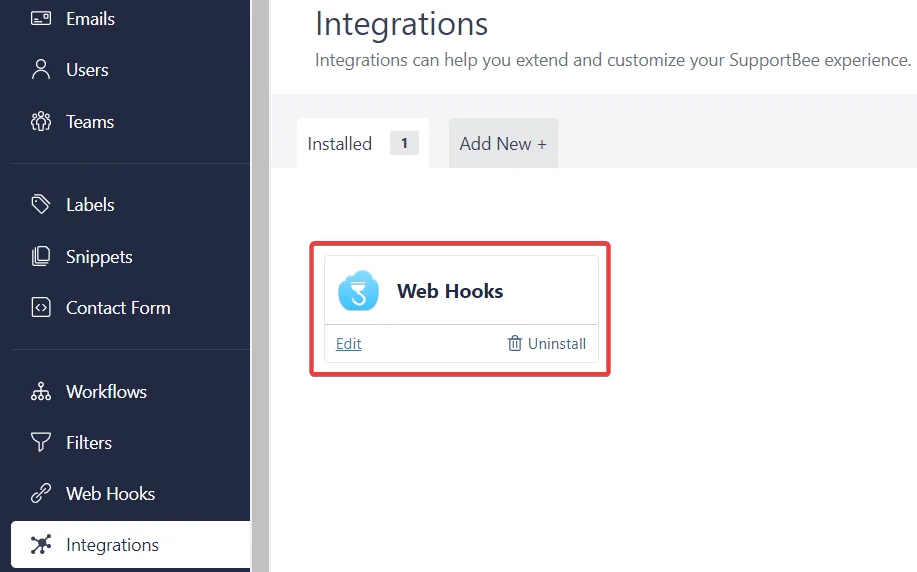
You have successfully set up the webhooks.
Legacy article, imported from the original Boost.space knowledge base (/knowledge-base/applications/customer-support/supportbee/).

